Much Ado About Nothing
Shakespeare probably wasn’t talking about this, but he could have been

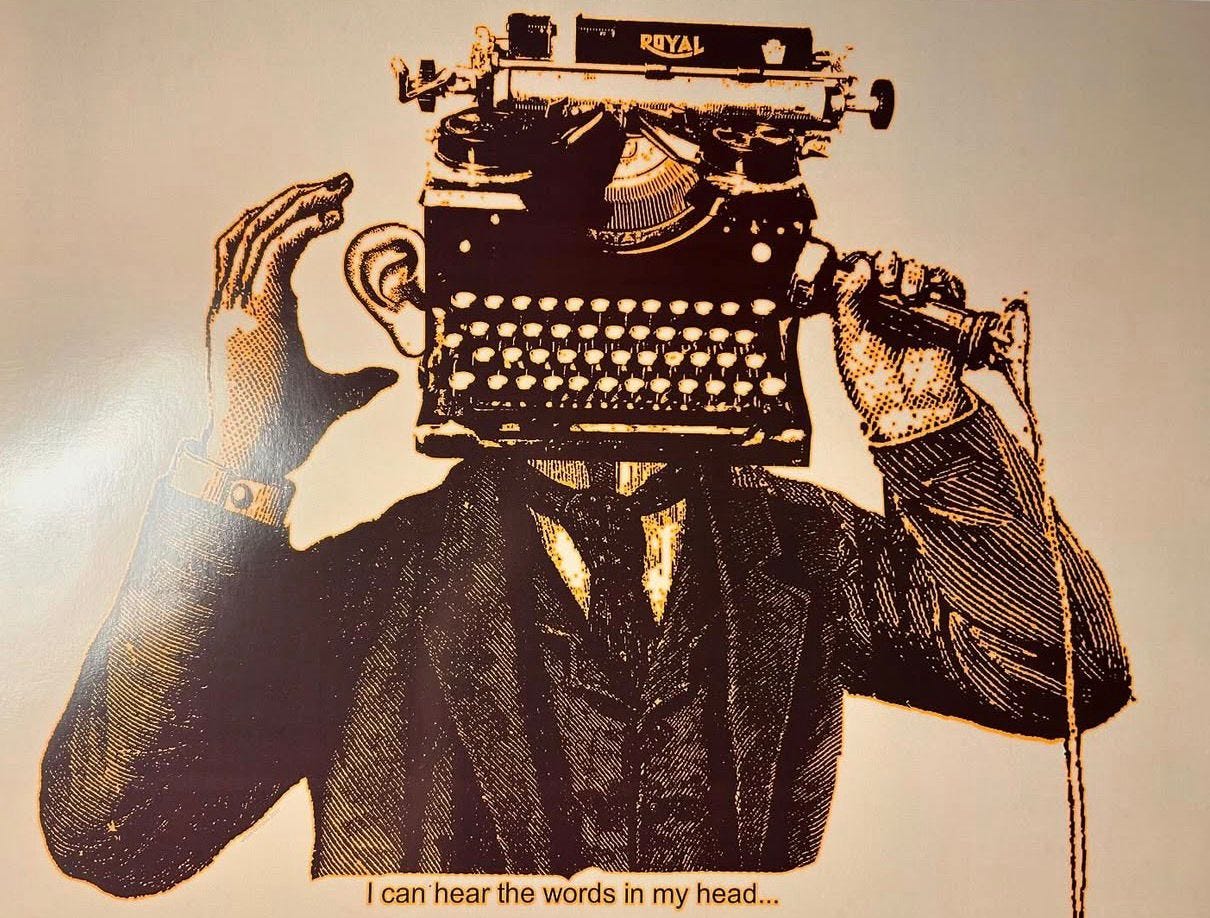
The mind has a lot to say.
Almost nothing matters.

A few years ago, I learned a trick that I’ve practiced ever since: treating thoughts as if they were irrelevant. I’m talking about those ruminations about a past that no longer exists, chewing over negative situations or regrets. Or the fertile imagination projected into the future, which also doesn’t exist. Completely useless.
I don’t always manage to apply this—only when I’m attentive and focused. But when it happens, whatever was invading the mind simply passes, light and fleeting, not deserving the weight we give it, because it truly has none.
The key is not believing the thought. Not getting carried away by it into a chain of little stories and scenes that keep repeating in the head—stories we tell ourselves with surprising conviction.
The problem is that we’ve always confused thoughts—the mind, that little inner voice, usually critical—with who we are. And we’re certain of it, as if it were an obvious, unquestionable fact. That certainty began forming early on, in early childhood, around the age of two, when any baby starts learning to speak and name things. In naming, we become the subject, and everything around becomes the object. That separation is our prison. Because of it, we spend our entire lives trying to fix and differentiate ourselves, living in a permanent state of comparison, usually with a less-than-favorable evaluation of ourselves in relation to what we think we should be—a finish line we’ve invented based on what we were “trained” to pursue, a success that exists nowhere. Meanwhile, life is happening in every instant, and in the next, I may no longer be here. That part we always sweep under the rug…
This mental blah-blah-blah has a curious trait: it is extremely repetitive and, most of the time, absolutely useless. The same themes, the same characters, the same scenes on loop, with small variations that lead nowhere.
The mind in automatic mode is a poorly tuned radio that no one asked to turn on.

The noise is there, constant, and we get so used to it that we begin to mistake the noise for our own voice—for who we are.
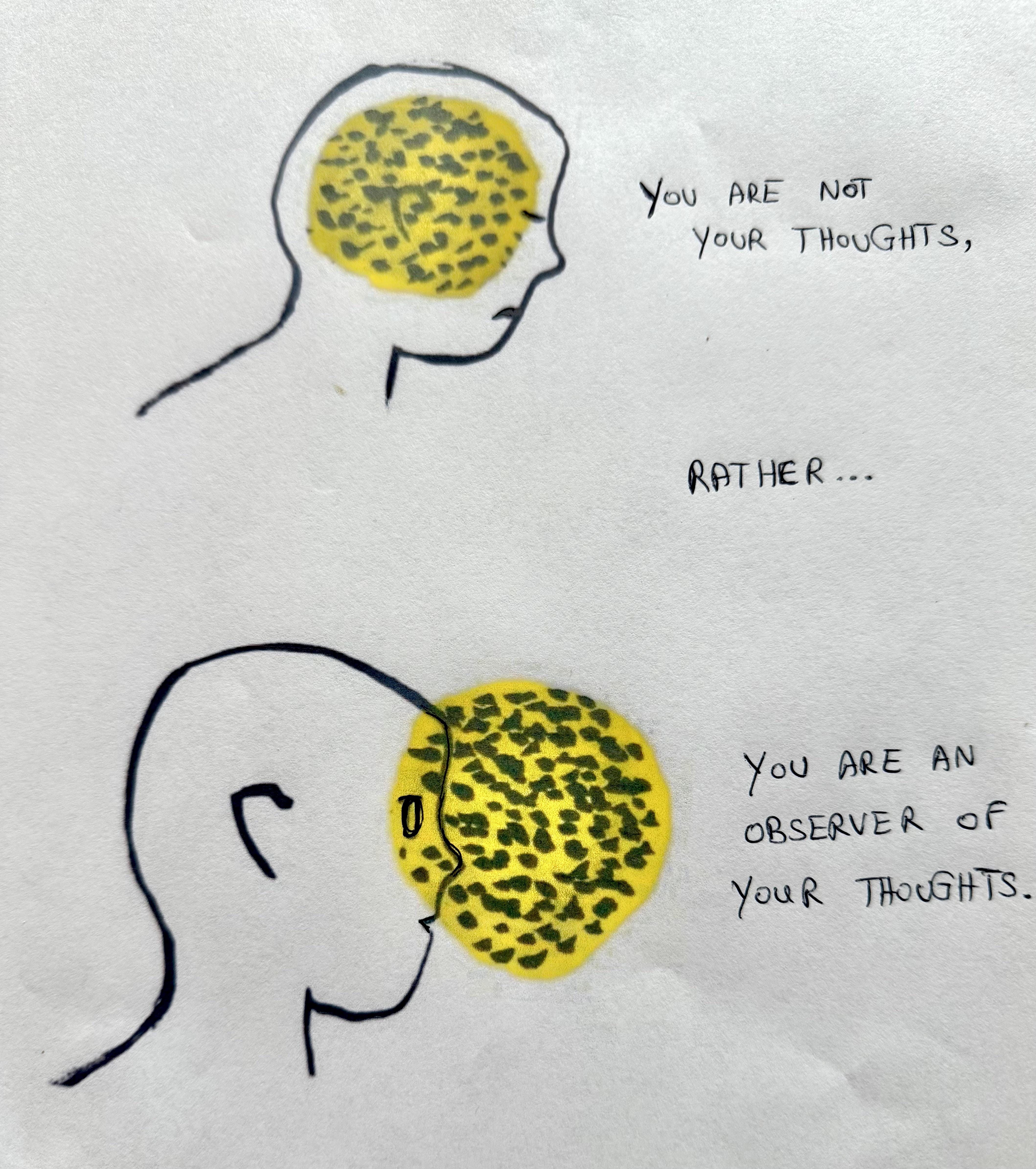
We don’t need to force the mind into silence. Anyone who’s tried knows it works more or less like trying not to think of a pink elephant. The more you try, the more it appears. What truly changes is the relationship with thought: noticing that it’s passing, without boarding it. Observing without following. This gesture, which seems simple and is sometimes the hardest thing in the world, creates a space between the thought and the one who perceives it. In that space lies presence.
The common mistake is to think that presence and mindfulness require meditation, posture, a mat, incense, an app, or at least half an hour with no commitments. Nonsense. Presence can happen while you wash dishes, listen to someone speak, wait for the elevator, or drive along a stretch of road you know by heart. In any of these moments, there is the possibility of noticing what is here, now, without the overlay of mental narrative. The soap foaming in the palm of your hand. The tone of the voice of the person in front of you. The light coming through the window in a way that will never repeat exactly the same again. Details that, for most of us, go unnoticed. I’ve been using contemplative photography to see the details that get lost in the automatism of everyday life. I’ll speak more about that soon.
The difference between being present and being on autopilot is the difference between living what is happening and internally processing something that has already happened or has yet to happen. A study conducted by Killingsworth and Gilbert at Harvard revealed that we spend, on average, 50% of our time with the mind wandering, disconnected from what is actually in front of us. Half of life, essentially, spent in conversations with an imaginary interlocutor about scenes that no longer exist or don’t yet exist.
If our attention settles on what is here, even for a few seconds, something shifts. The ruminating thought loses strength because attention has moved elsewhere—to the real, to the concrete, to what is actually happening.
Try it now, without any special intention. Choose anything concrete around you: a sound, the contact of your feet on the ground, the temperature of the air entering your nose, the weight of your body on the chair, the brushing of fabric against your skin. Stay there for a few seconds. The mind will comment, will recall urgent things, will have an opinion about what you’re doing. Thank the dedication of that machine. That which perceives all of this was already here before the thought.
Thought passes. That which observes remains.
“Yeah, well, you know, that’s just, like, your opinion, man.”
— The Big Lebowski
You can find my other essays translated to English, here: