

The Subtle Art of Editing Experience
A conversation about the machine, language, and the forgetting of who we are


Between what happens and what we say about what happens, there is a brief, almost invisible interval. That is where the machine usually takes command. This essay lives in that interval.
Beyond the familiar tendency to organize and live our lives around the prevention of discomfort and the construction of zones of safety — in search of lasting comfort — there is a subtle movement shaping how we think, speak, and explain ourselves. It appears in everyday language, in the almost automatic structuring of sentences, in a short and socially neutral word that rarely attracts attention. This three-letter word is “but.” When it appears, something in us contracts. Try to notice.
“But” works like a reflex, an automatic reaction of what Gurdjieff called the machine. The machine comments, adjusts, reorganizes. It operates through repetition, memory, and conditioning, sustaining the continuity of the character with remarkable efficiency. “But” is a central gear in this functioning, always ready to maintain internal coherence while preserving the feeling of “logic and clarity,” things our mind/ego appreciates.
When I say, for example, “I’m excited about next year, but…,” the experience has already been interrupted. It appeared whole for a moment and was then reorganized to fit a narrative familiar to us.
“But” enters as immediate editing, reshaping what is lived so it does not cross certain implicit limits. The machine prefers interpretation to remaining with the experience. Prolonged contact with experience requires a space it rarely grants.
This becomes evident in ordinary situations. Someone close says something that touches a sensitive point — simple, direct, without accusation. The body reacts before the next sentence exists. There is a slight tightening, a short silence, a moment in which everything is still open. Soon after, the “but” appears. The response comes polite, articulated, apparently conscious. The conversation continues; both remain seated at the same table, and yet something has moved away. There was no conflict, only an adjustment — the encounter replaced by “management.”
No one argued, no one raised their voice, no one openly disagreed. From a social and psychological point of view, everything went well. The conversation remained civilized, mature, functional. That is precisely why the gesture goes unnoticed.
The moment “but” enters, listening ceases to be whole and becomes strategic. The response no longer arises from the impact of what was heard, but from the need to maintain balance, image, emotional control, narrative coherence. The other is still physically present, yet no longer truly met — they are being managed. What occurred was an internal adjustment.
This is why something in us withdraws even without conflict. Encounters ask for risk, silence, presence without editing. Management asks for efficiency, adjustment, continuity. When one enters, the other leaves.
The gesture repeats in even smaller scenes. A fatigue appears in the middle of the day. The body asks for a pause. Thought recognizes it for a second and immediately adds a “but not now,” “but just a little longer,” or something similar. Nothing dramatic happens. The day continues functioning and so does the body, yet something has again been placed in parentheses by habit. The machine knows how to keep going.
This movement shifts our attention toward something recognized, touched, perceived — and quickly transferred to a more familiar, manageable territory. The sentence advances, reasoning proceeds, the conversation continues, while the living point dissolves somewhere within the dialogue. “But” restores a comfortable distance, sufficient so nothing has to be fully met.
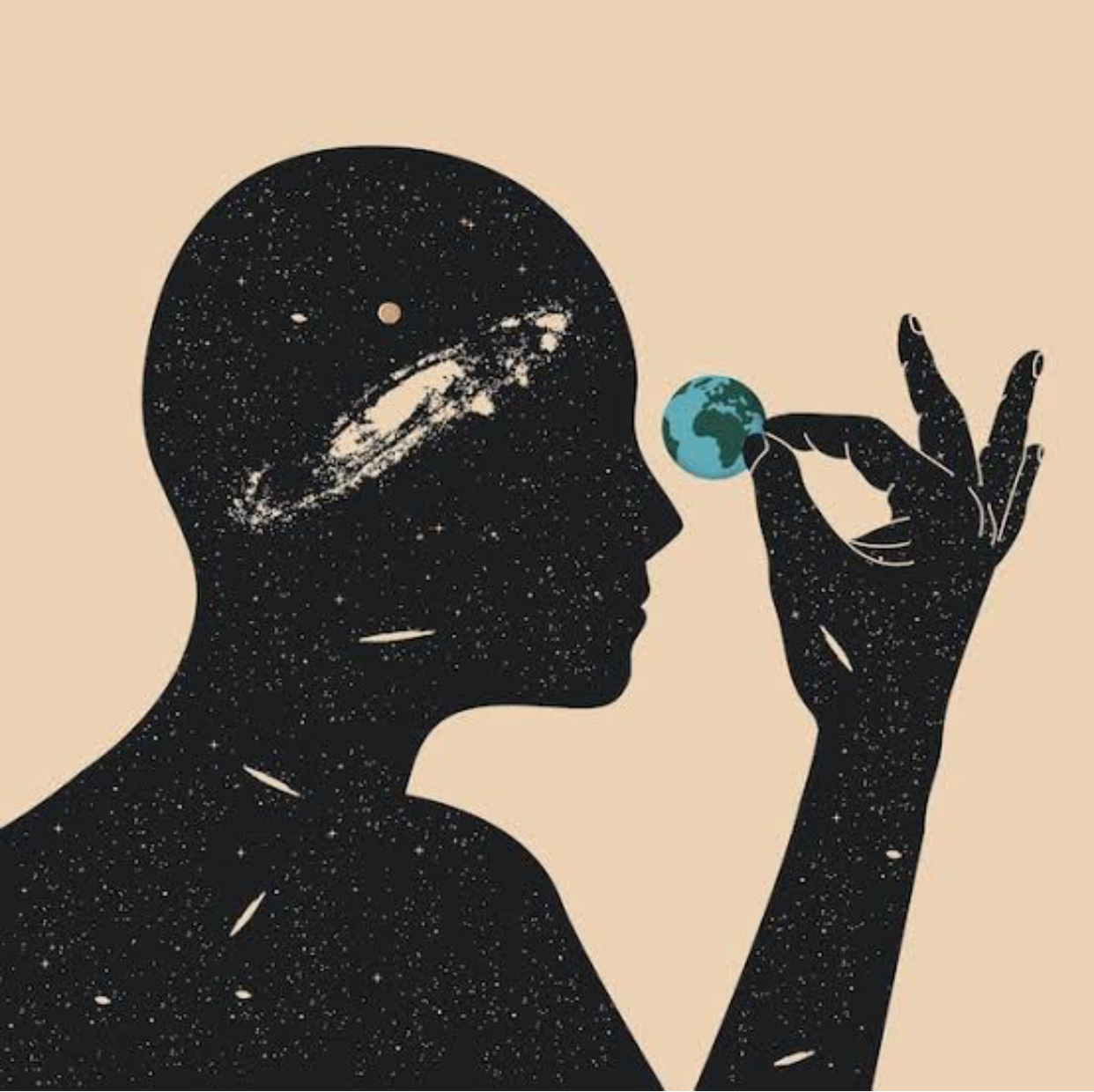
At the base of this functioning, of this “logic,” lies a silent assumption, rarely examined: that there is a center in charge of administering experience. A “self” located somewhere, organizing what appears, deciding intensities and impacts, regulating duration and sequence. From this assumption, life becomes a process to be managed. In the nondual view, this separation appears as a perceptual habit sustained mainly by language and memory — I write this not as a claim, but from experience.
“But” sustains this habit. It always appears after the event, as a late attempt at reorganization. The experience has already passed through. “But” arrives to rearrange the scene, soften impacts, redistribute meaning — a later commentary trying to occupy the original position.
When this assumption of centrality and separation relaxes through some direct, lived clarity and understanding, the need for this kind of intervention diminishes. Language no longer requires conscious correction. The gesture loses strength for lack of function. What becomes evident is inclusion, a natural consequence of a less fragmented perception.
Sensations, thoughts, and situations coexist without urgency for adjustment or hierarchy. It is no longer “this or that”; it becomes what it always already is: “this and that.” Everything together, all at once.
Relationships could then carry less accumulated tension, conflicts would stop gaining additional layers of explanation, decisions would no longer require prolonged internal debate for legitimacy. Life would continue with its usual challenges, and the automatic resistance to them would lose intensity. Much of the weight is not in what happens, but in the constant attempt to reorganize what happens so it aligns with a previously desired image — unconsciously, or consciously too.
This does not mean we must monitor our words or replace linguistic constructions, because that would only shift the same mechanism to another level. The important point is to notice the reflex when it occurs, recognize the gesture in action, and not interfere. The machine continues operating, as it always has. What needs to dissolve is the belief that it occupies the center.

“Well, you know, that’s just, like, your opinion, man.”
— The Big Lebowski